A story by Senior Digital Marketing Coordinator Megan Mahon. An excerpt of this article is also featured in the November 11, 2026 e-newsletter, Now in Nature.
For those who enjoy the occasional dose of high school nostalgia, what fall memories first come to mind?
Cheering alongside your friends and classmates at Friday night football games, enjoying the iconic cut-open single-serving bag of “walking taco” from the concession stand, late night bus rides to and from band competitions, and of course, the homecoming parade.
Homecoming, at least for those in the U.S. (and maybe Canada), is an annual fall tradition where high schools and universities welcome back alumni and celebrate school spirit through various community-wide festivities.
Although the origin of this American tradition has been to rally support for the football team to win the “big game", it’s yet another example of how deeply rooted humans are to seasonal cycles and shared community rhythms.
In fact, the observance of “seasonal returning” is a phenological event celebrated by nature enthusiasts—particularly bird watchers.
There are two peak migration seasons in the United States: spring migration, when birds migrate to northern breeding grounds, and fall migration, when birds migrate to warmer southern wintering grounds. In both instances, the birds are “returning” to a location where they will spend the next several months.
So, which of the two migrations is the true homecoming?
Ohio sits directly along two major North American bird migration flyways—the Mississippi Flyway and the Atlantic Flyway. Luckily, for Ohio birders, that means experiencing a wide range of diversity that passes through.
Although there are bird species that live in one location all year long, each migration brings a new wave of additional bird species to the area. Just as spring reawakens us as we transition into summer and fall allows us to gently settle into winter, the birds that come and go, in a way, establish us into the solstice seasons.
While other birdwatchers may choose to scope waterfowl rafts out on the lake or seek out a corn field of Sandhill Crane flocks numbering in the thousands, there are a number of unique, weird, and wonderful fall/winter migrants that you may not have noticed, just outside your door!
In fact, you may just catch a glimpse of these “recent arrivals” around Rowe Woods:
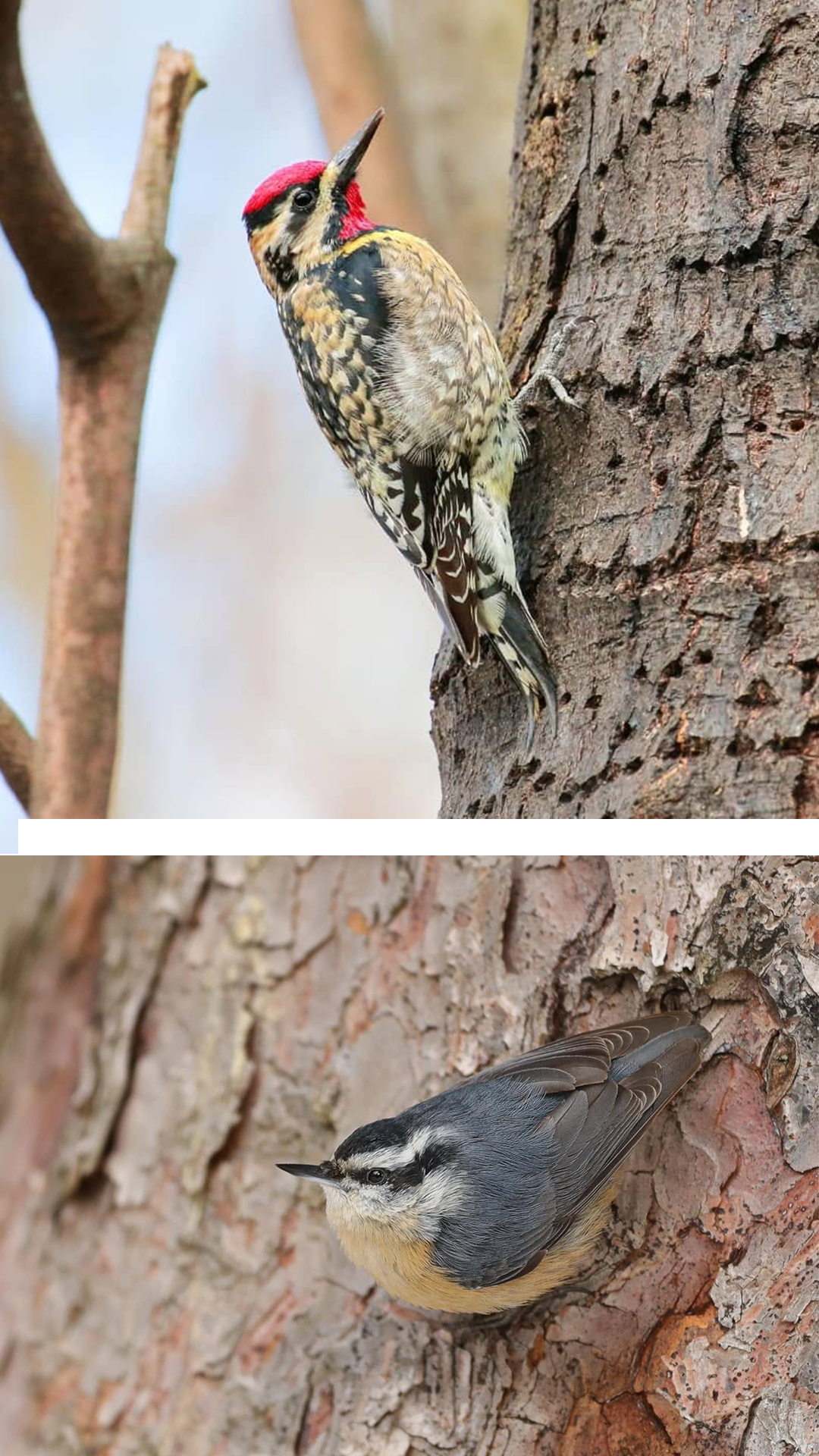
If you hear a bird that sounds like a squeaky dog toy, you may be hearing the call of a Yellow-bellied Sapsucker (Sphyrapicus varius). These cheeky woodpeckers can often be observed licking sugary sap from sap wells drilled in horizontal lines on the maple and beech trees otuside Rowe Visitor Center.
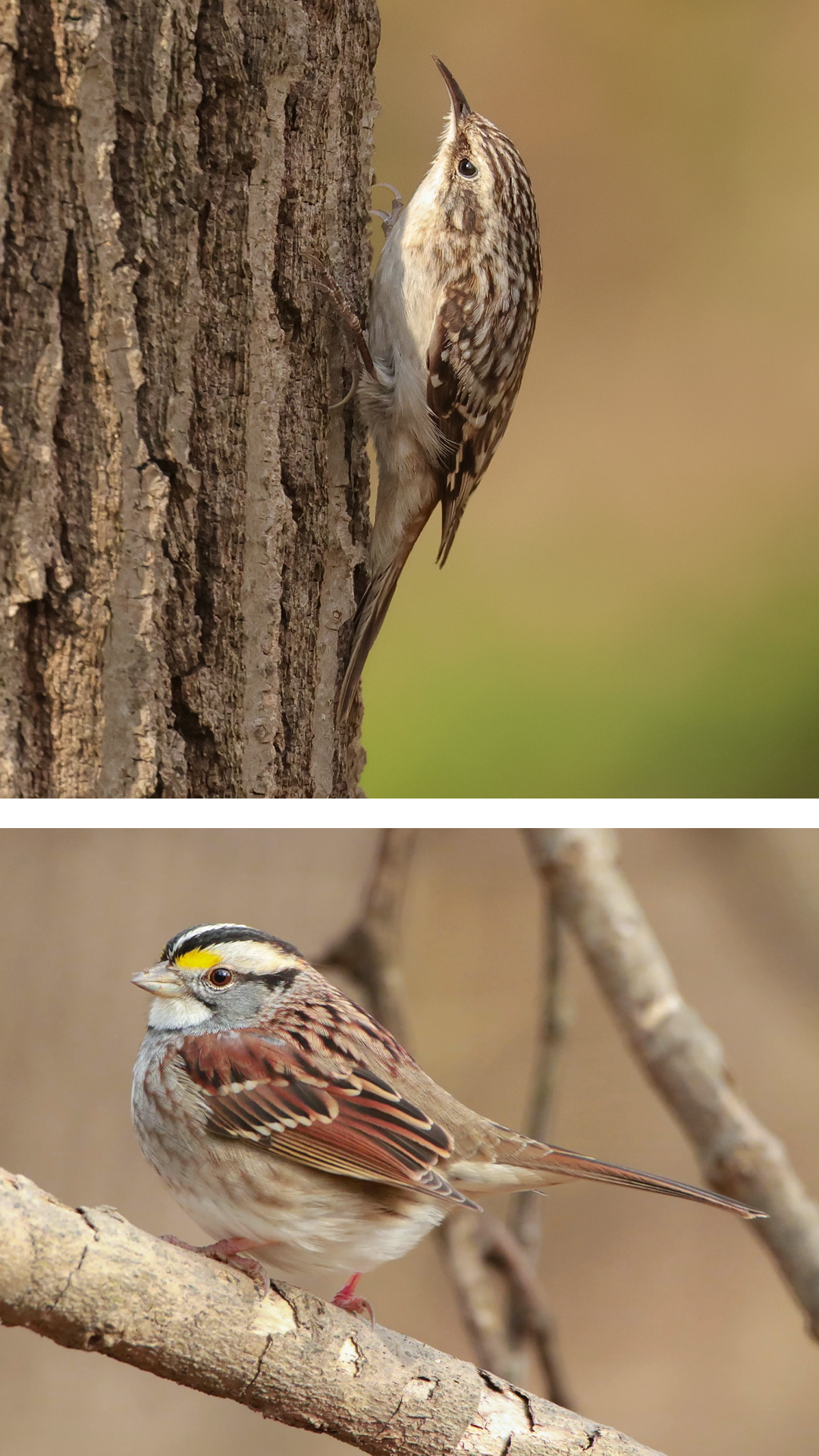
The sharp metallic "plink" calls of the White-throated Sparrow (Zonotrichia albicollis) becomes common place once again along Edge, Whitetail Trace, and Lookout Trail. These chunky sparrows can often be observed near bird feeding areas, along the forest edge, or inside thickets and dense shrubs. While most migrants save their song for spring breeding season, the White-throated Sparrow dazzles us with a loud and yet, haunting "Old Sam Peabody Peabody!"
That high-pitched, slightly trilled single note from what may seem like an invisible source from above, is the call of the elusive Brown Creeper (Certhia americana). These tiny, mysterious birds are more often heard than seen. To spot one, scan the trunk of a tree, starting at the base, in the direction of the call until you spot a small brown and white bird spiraling upward in bouncy movements.
Another bouncy fall migrant, most often heard in the Rowe Visitor Center parking lot, is the Red-breasted Nuthatch (Sitta canadensis). Similar to the White-breasted Nuthatch (Sitta carolinensis), which is here all year long, the Red-breasted Nuthatch can be observed zig-zagging headfirst down tree trunks and along tree branches. Red-breasted Nuthatches have a rusty-orange chest and belly, a bold black eyeline, and are roughly 1–1.5 inches smaller than the White-breasted Nuthatch. The best part about them though, in my opinion, is their comically nasally, Steve Urkel-esque song and call.
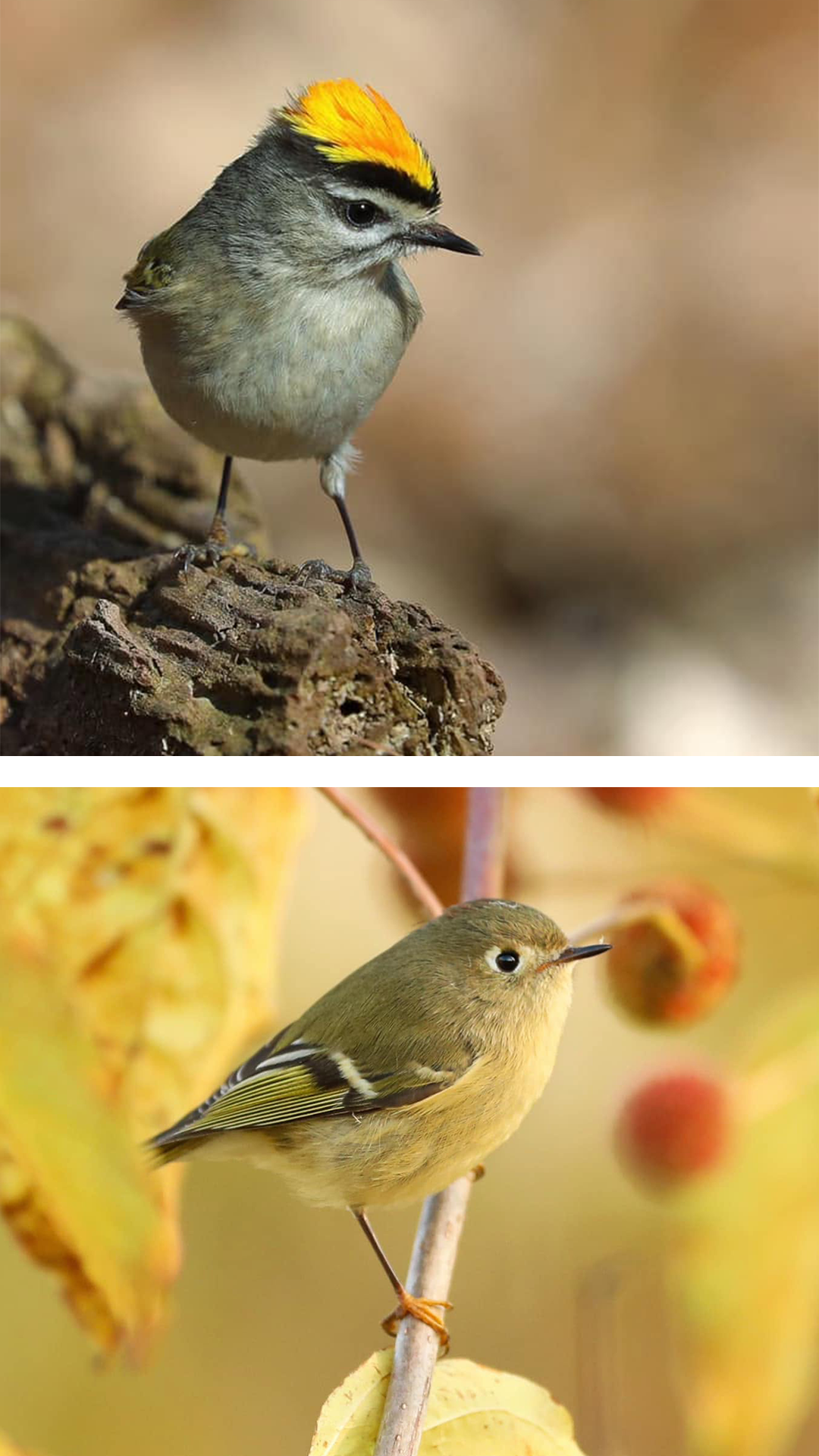
Finally, the kinglets: the Ruby-crowned Kinglet (Corthylio calendula) and the Golden-crowned Kinglet (Regulus satrapa). The call of a Ruby-crowned Kinglet is similar to the short “chit chit” calls of an agitated wren. The call of a Golden-crowned Kinglet is high-pitched like the Brown Creeper—and often heard within the same proximity—but instead of one long note, listen for 3–4 “see-see-seet” notes. Both species are quite hyperactive and can be observed flitting through a tree or shrub or hanging off the ends of branches as they forage for insects.