

Spring and summer mornings at Cincinnati Nature Center often begin with the cheerful song of an Eastern Bluebird. Flashing brilliant blue across our meadows, these familiar birds are a welcome sign of the season. But while bluebirds may seem right at home here today, finding a safe place to raise a family hasn’t always been easy.
Eastern Bluebirds (Sialia sialis) depend on natural tree cavities to nest, but those homes became scarce through the mid-1900s due to habitat loss, the widespread removal of dead and decaying trees (snags), and competition from invasive species such as House Sparrows and European Starlings. Pesticide use and changing land management practices added further pressure, contributing to steep population declines. Fortunately, bluebirds are adaptable when it comes to housing—as long as the space is safe and suitable. That’s where our dedicated Bluebird Box Monitoring volunteers come in.
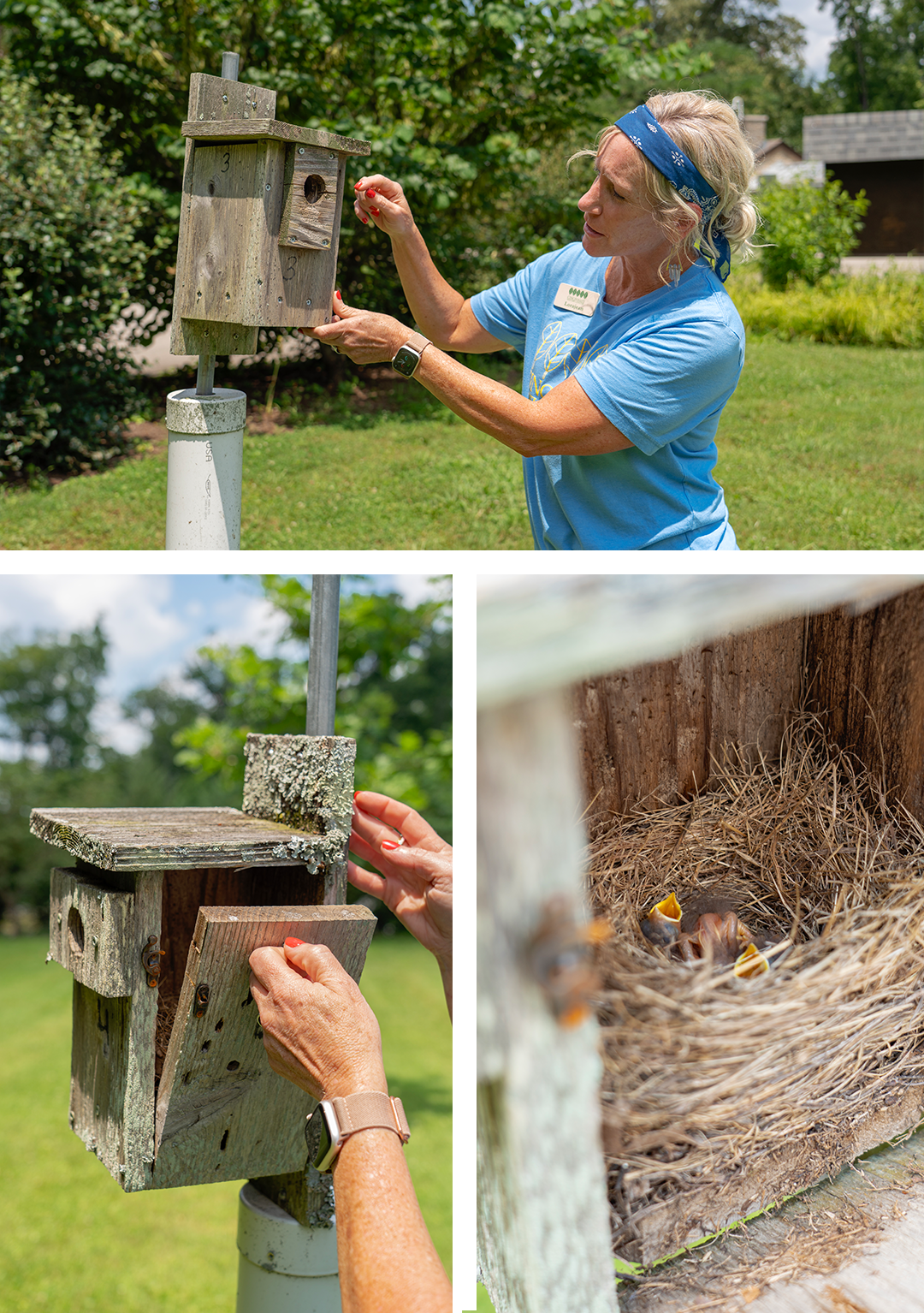
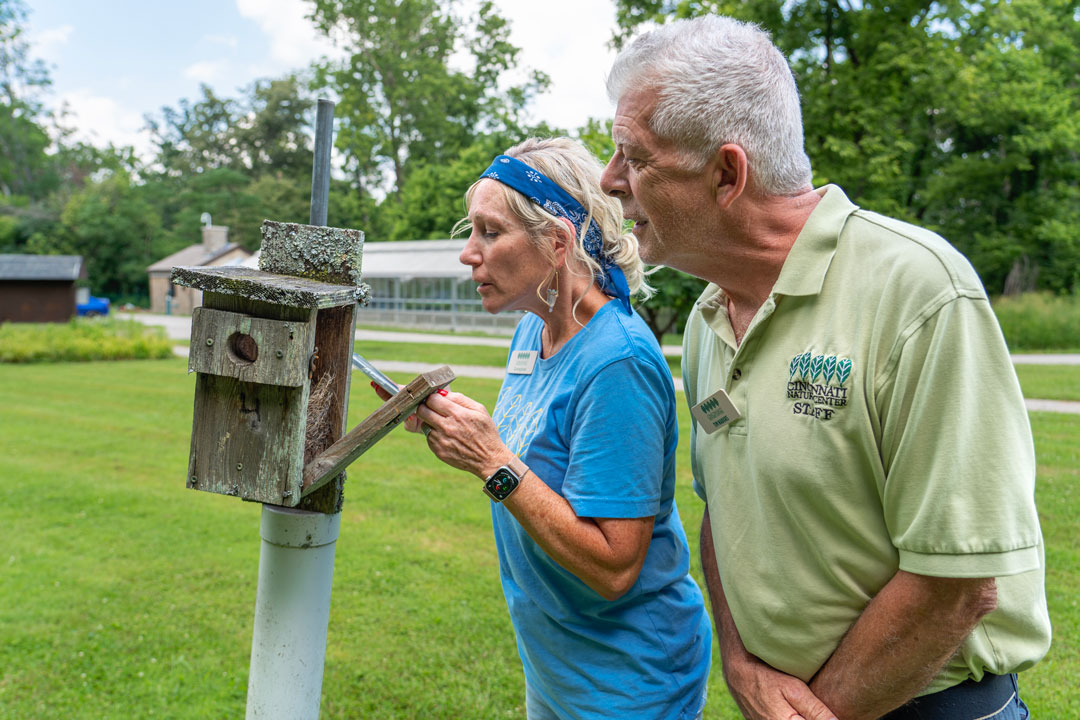
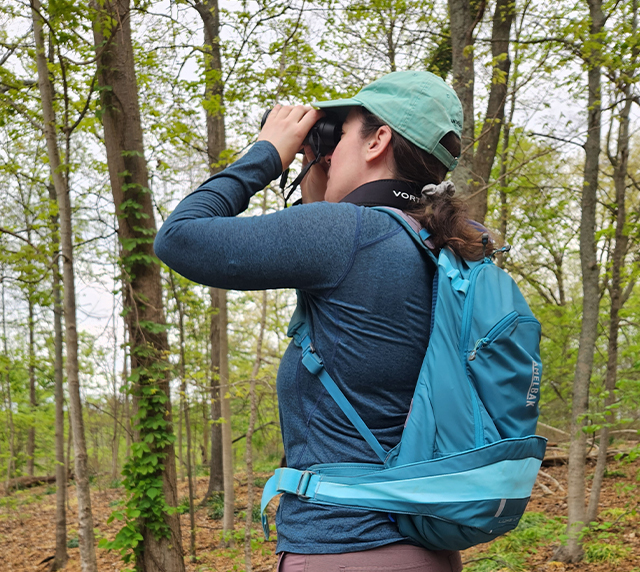
Each breeding season, from late March through late August, volunteers monitor more than 100 nest boxes throughout Rowe Woods and Long Branch Farm & Trails. These carefully placed boxes provide essential nesting habitat not only for bluebirds, but for other native cavity-nesting birds. Twice a week, volunteers quietly check each box, and record nesting activity while minimizing disturbance. Think of them as part landlord, part scientist, and part neighborhood watch.
Inside every nest box, the story of a new generation may be unfolding. A woven cup of grass becomes a nest of sky-blue eggs, which soon gives way to fast-growing nestlings. Before long, those fledglings take their first flight. Many bluebird pairs raise two to three broods each season, making for very busy months caring for all those children.
But monitoring is about more than counting birds.
The data collected by volunteers helps track nesting success, identify potential challenges, and monitor long-term population trends. At the end of each season, our observations are shared with the Ohio Bluebird Society and the Cornell Lab of Ornithology, contributing to broader conservation efforts across the region.
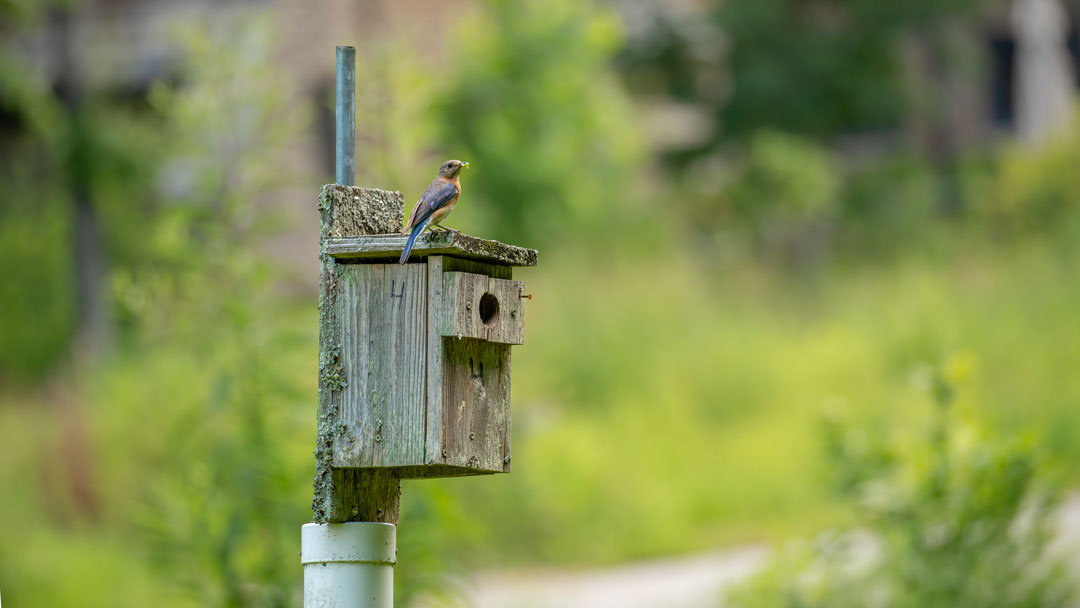
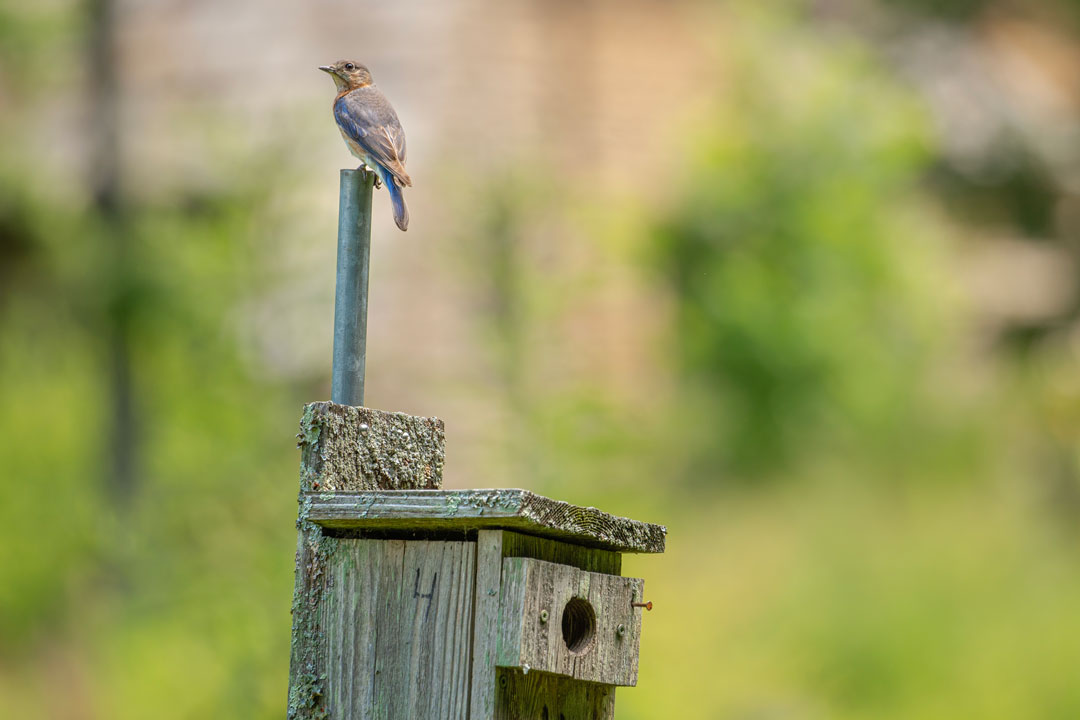
The next time you're walking a trail near one of our open fields, keep an eye out for a bluebird perched atop a nest box. It may look like a simple wooden box, but it represents hours of careful stewardship by dedicated volunteers ensuring that the flash of blue across a summer meadow will remain another one of Cincinnati Nature Center's memorable sights for years to come.