

Picture this: You’re out for a hike, passing by trees, ponds, and forest landmarks you’ve passed plenty of times before, when suddenly, something catches your eye. What’s that stirring beneath those leaves ...
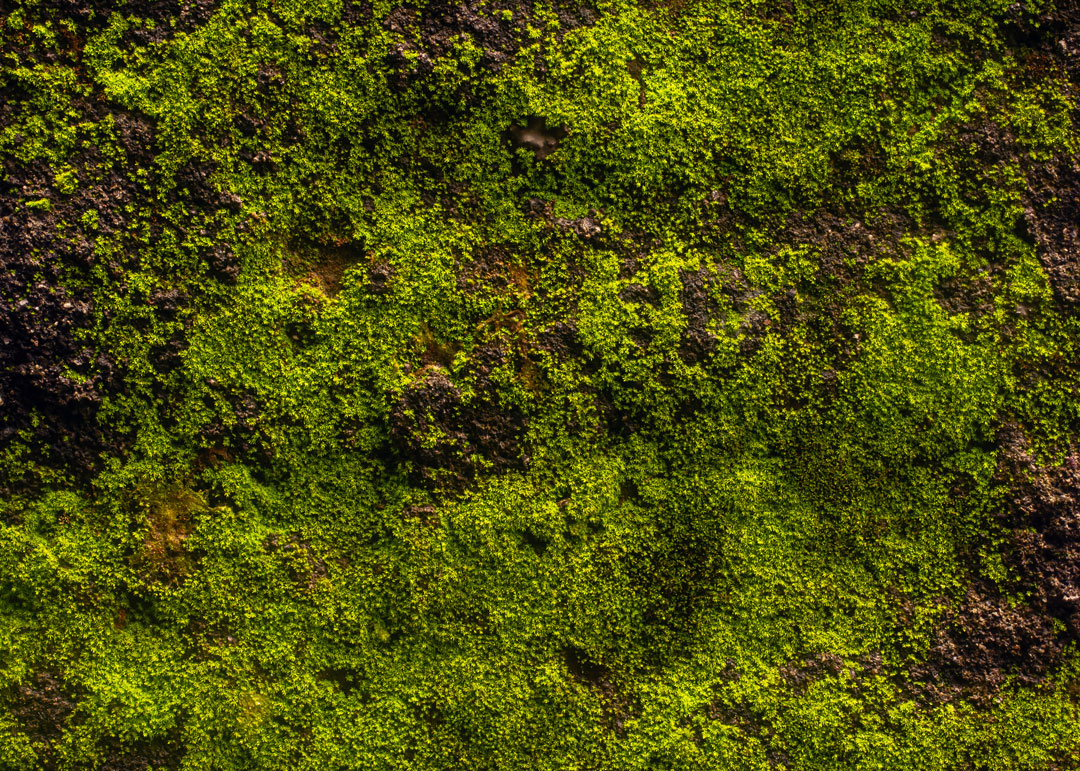
As you stop to inspect what you’ve seen, you become immersed in the wildlife around you. What once seemed just a “part of the landscape” is made fresh in this moment as you take it all in. You see vibrant green moss creeping up a tree trunk and notice the sound of buzzing bees working tirelessly to pollinate nearby wildflowers. Kneeling to get a closer look, you’re struck by the freshness this altered perspective brings. Now eye level with the understory, you meet the wiggly body of an inchworm, wave hello to a long-jawed spider, and shoot a wink to the original creature you saw move—a curious chipmunk burrowing into a small pile of leaves. Suddenly, it’s like you have superpowers to see what once felt hidden. Pretty incredible, right?
I’ve dubbed this phenomenon “the art of noticing." I feel it most when I focus less on my hiking speed and mileage and more on the act of mindfulness. Smells, sounds, and sights that once blended into a homogenous whole become clearer and more perceptible. The art of noticing turns an ordinary moment into an extraordinary one. Let’s dive in!
The art of noticing involves a level of presence in all of the senses as well as a willingness to slow down and act on curiosity when it arises. Slowing down and learning to truly notice and observe the world around you is a skill worth honing in on, I think. For me, I notice that it not only brings me joy to delve into all the happenings around me, but it also connects me back to myself and my own body and ignites my innate childlike sense of wonder. I can tap into this level of calm, awe, and zen that usually feels unattainable in today’s fast-paced world.
My first encounter in learning to observe the space around me with fresh eyes happened earlier this year. In the thick of winter’s cold, dim embrace, something clicked.
After a particularly hectic workday, I was deeply in need of some nature therapy. Even though there was over a foot of snow blanketing the ground, I trekked through to a nearby bird blind to revel in a few moments of nervous system regulation. As I sat there admiring the birds twittering from feeder to feeder, I heard a loud ‘THUMP’ as an exceptionally puffed-up Carolina Wren (Thryothorus ludovicianus) landed on the inner railing of the blind, a mere two feet from me. I sat there astonished and agape at this creature’s fearlessness and inquisitiveness about me as he cocked his head to look up at me. Time stood still as I relaxed into watching this bird bounce from the blind, to nest, to feeder, and back to the blind. Before I knew it, there were four wrens popping in and out of the bird blind. Like fairies, they bounced around the blind and feeders with character and ease. As I left the blind that evening, I found myself inspired to create more moments of mindfulness with nature, no matter the season.
If the above instance was me dipping my toes into the art of noticing, then this next encounter was my full deep-dive into it.
Over the past two months or so, I’ve seen the art of noticing take flight in myself as I’ve become acutely aware of a mated pair of Cooper’s Hawks (Astur cooperii) nesting right across the street from my house. In February, there came a bird call I hadn’t heard before—a strange “kek kek kek” from an unseen creature that almost seemed to be laughing at me.
The kek kek kek-ing was incessant and was heard multiple times per day every day. I had no luck finding the cackling bird, until one day I spotted her looking directly at me from a branch in a nearby tree. I hadn’t looked there before and suddenly thought of all the times this bird must’ve been perched in this tree, going unseen by the drivers, walkers, and cyclists that traveled this route every day.
It wasn’t long before I became hooked on watching the hawk as she sat perched on her branch. Then one day I noticed a smaller bird perched in the tree with her. My excitement grew when I grabbed my binoculars and realized it was another slightly smaller Cooper’s Hawk—a male!
Over the following months, my husband and I have watched these birds daily as they go about their bird-ly duties: hunting, nest building, mating rituals, and more. It’s been one of the most rewarding experiences of this season of life, and I’ve spent a good deal of time writing down my findings and sketching the birds when I see them.
Since my deep dive into the art of noticing I’ve witnessed so much of nature’s magic—raptor courtship habits, woodpeckers finding and excavating snags, and phoebes frantically grabbing nearby spiderwebs to reinforce their nests. I approach my day-to-day life with a renewed sense of wonder, as if I’m being born each moment into newness, and I relish in knowing the uniqueness and treasure of being present in that very moment.
I can’t say I learned all of this on my own. I’ve had some fantastic mentors and naturalist friends who’ve shown me so many ways to practice this skill set.
Here’s some of what I’ve learned:
Keep your eyes and ears open to the environment around you. Humans are remarkably good at tuning things out in our day to day lives—it’s time to instead tune in. Scan the understory for bugs, mosses, and lichens and the canopy for birds, bats, and squirrels. Listen to the symphony of the forest and see what animal and insect songs you can pick out.
Make time to enjoy nature every day. Sit in the same spot season to season—notice the slow then sudden change of the seasons through this single spot. Document your findings, day by day, month by month. You are an explorer discovering this space like many naturalists have before—this doesn’t make your experience in nature any less unique.
Once you’ve grasped this skill yourself, tap your friends, family, or partner in on the fun. I’ve been delighted to see my husband’s naturalist side peeking out more and more with each hike we go on. Even walks around our suburban neighborhood have become discovery sessions, each of us learning to hone our senses and tap into the macro and micro worlds around us.
Have you ever looked closely at an isopod scuttling along silt in a stream, or stopped to admire a ladybug walking along a leaf? There is so much to see, hear, touch, smell, and experience out there.
The next time you’re trekking on the trails, indulge your senses in a moment of mindfulness—breathe in the smell of earth, touch and feel the flora around you, and listen to the symphony of songbirds and squirrels as they go about their days—you just might notice something new.