

What started as a whisper has grown to animated conversations over neighbors' fences and during garden club meetings. Why are we allocating so much space in our gardens to mulch? Does anyone really find joy in a sea of mulch? Do we need our entire lawn? Can we relinquish half, or even more of the lawn to create a garden that is beautiful for us and benefits nature?
The impetus for this change of garden heart is due in great part to homeowners being the first on the block to create front yard pollinator gardens. Books, podcasts, lectures, and classes plant the seed - excuse the pun - for doing more with our gardens to support nature. But I believe it’s when we see, in our own neighborhood, a landscape that’s embracing this new way to garden, we find the inspiration to make the change ourselves.
When we take a balanced approach to planting with nature, inviting native and cultivated plants to reside in our new gardens, we make it easier for homeowners to forgo the lawn or expand existing gardens.
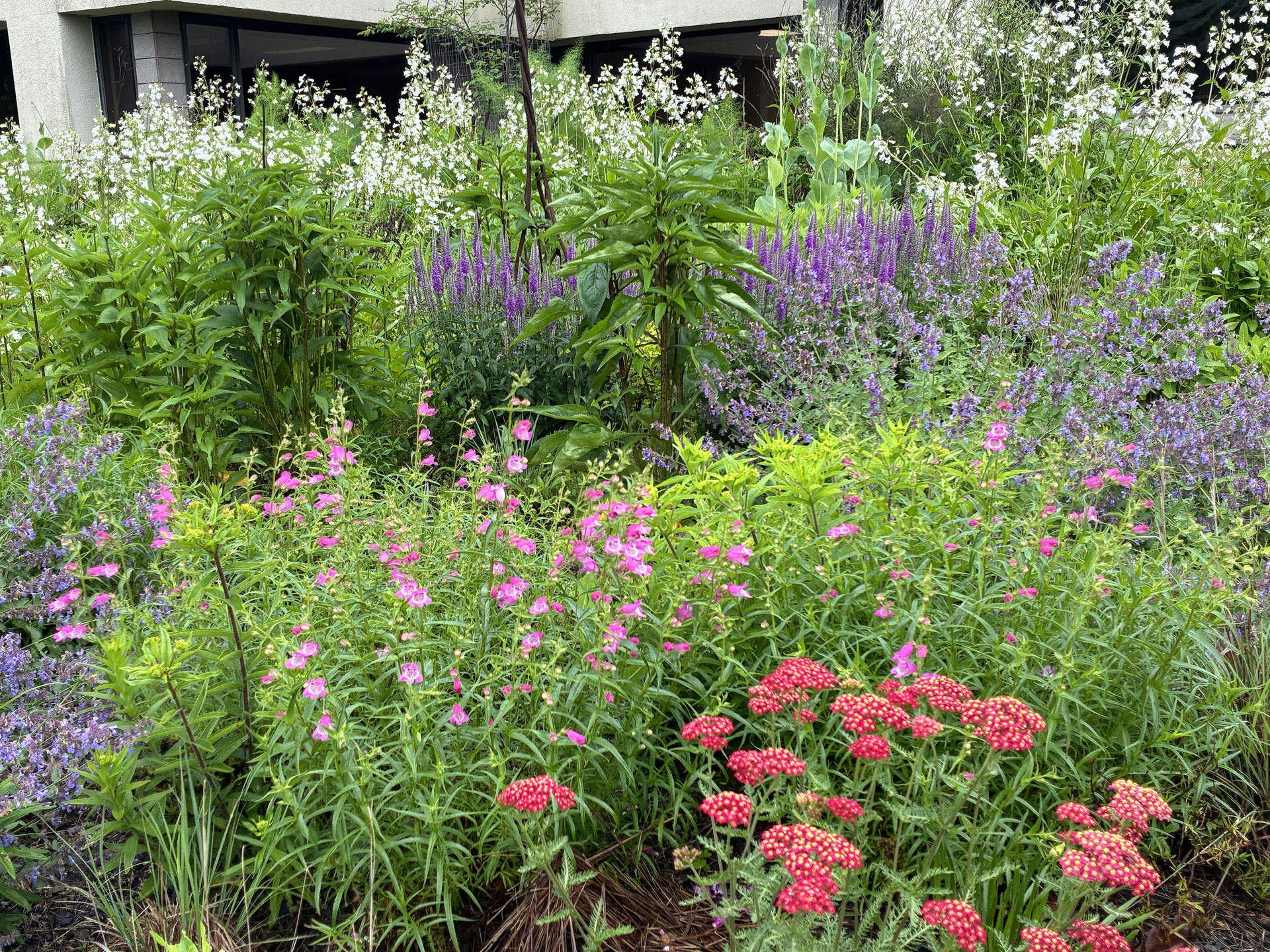
The ever-cheerful cleomes and verbena bonariensis co-exist with little bluestem, asclepias and baptisia. Within the garden, old familiar favorites like Nepeta ‘Walkers Low’ and peonies cozy up to penstemon digitalis and echinacea pallida. This new way to garden looks rather familiar after all. It’s not a dismissal of all we know and love about gardening, but rather an introduction to new plants and in numbers that negates the need for mulch.
Cincinnati Nature Center’s Garden Tour: Noteworthy Natives is invaluable as it invites gardeners who may feel apprehensive and overwhelmed when thinking about transforming their landscape to explore gardens on a personal, home garden level. The Piet Oudolf, Claudia West, and Kelly Norris gardens are amazing wonders to behold, but they don’t always translate to the home garden. With this tour, attendees see design practices for creating landscapes that nourish nature that are brought into scale and presented in a way that we can adopt for our own gardens.