

This article was also featured in our January 21, 2026 issue of Now in Nature.
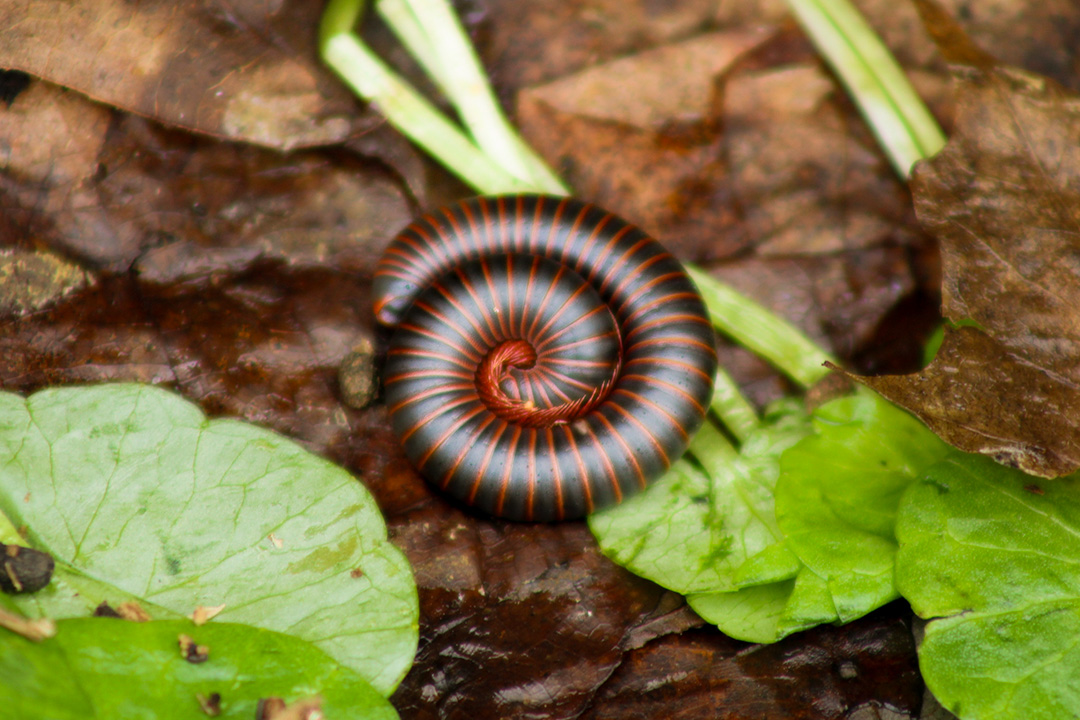
One morning during a school field trip, I was leading a small group of 2nd graders and their chaperones along the trail when we spotted something curled tightly on the forest floor—a giant millipede, shiny, slow-moving, and very still.
The children gathered close right away. One child, though, hung back. His hands were tucked behind his back as he shook his head. “I don’t want to touch it,” he said quietly.
I didn’t feel the need to rush the moment. There was no lesson plan to push through—just curiosity unfolding in real time. I knelt down with the group and watched as the chaperones and children modeled something powerful: calm curiosity. They gently held the millipede, letting it crawl across their palms, giggling at how much the millipede’s little feet tickled. Before long, the children began asking questions out loud and noticing small details.
Why do you think it curls up like that? How many legs do you think it has?
The child who didn’t want to touch it stayed close, listening. Slowly, he stepped closer. Then closer still. After watching the chaperones and other children treat the millipede with care, he reached out—just one careful finger. His face lit up.
A few moments later, he had an idea. “We should name it.”
And just like that, the millipede wasn’t something to fear. Naming it made the experience playful. It gave the children a sense of ownership and helped them feel connected to a living creature they might have otherwise avoided. That small, brave moment opened the door to curiosity, empathy, and care.
We call moments like that "sparkles".
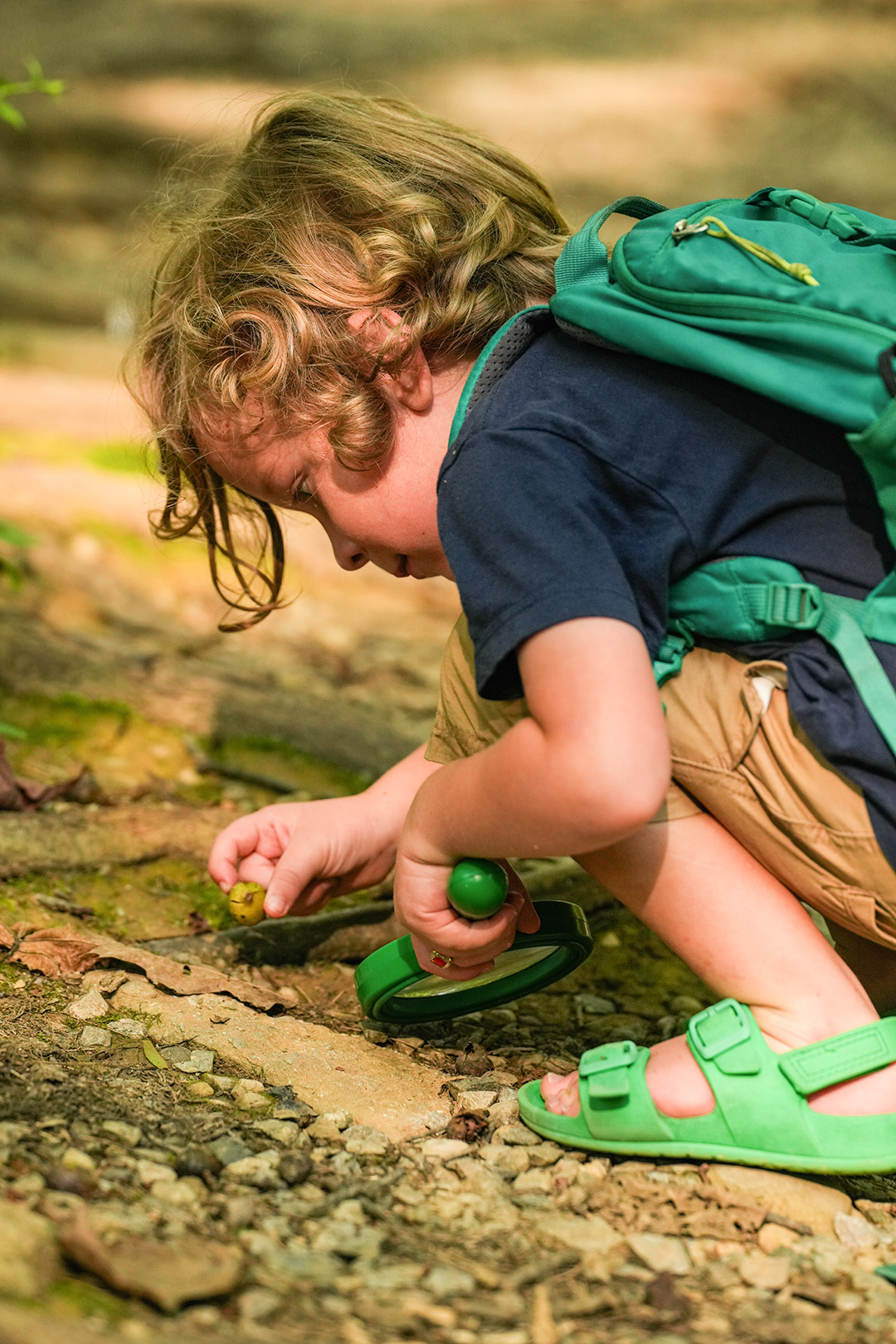
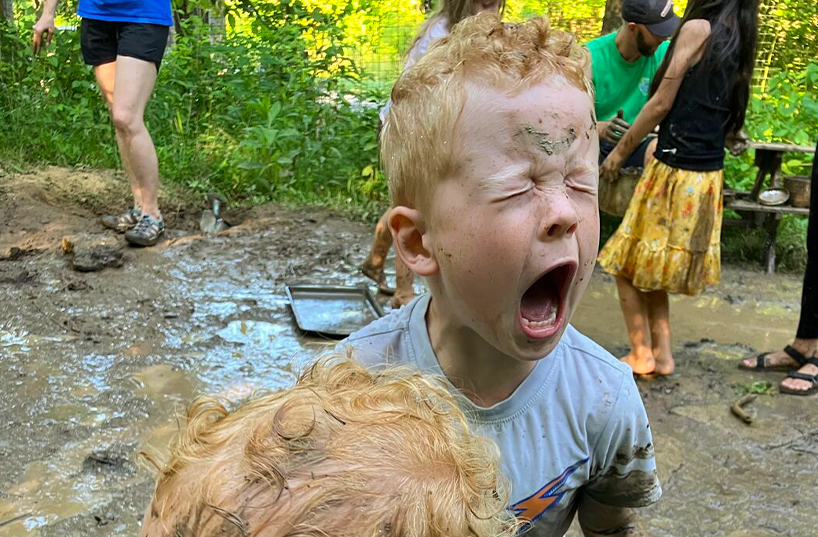
When young children learn in nature, science doesn’t feel like a subject—it feels like discovery. A muddy puddle becomes an experiment. A fallen log becomes a home. Questions rise naturally, led by wonder instead of instruction.
Research says that outdoor science learning supports both understanding and joy. With time and space to explore, children build confidence, focus, and problem-solving skills—and begin to see themselves as capable little scientists. Nature play also helps children understand that they are part of the natural world, not separate from it, especially when trusted adults are exploring right alongside them.
That’s the heart of programs like Little Scientists at Cincinnati Nature Center: creating space for curiosity to grow through playfulness, shared discovery, and gentle guidance.
It looks a lot like that morning on the trail—when a child who didn’t want to touch a millipede ended up naming it instead. A small, brave moment. A sparkle. And a reminder that when children feel safe to wonder, curiosity takes the lead.