

Wanted: Invasive Plant at Large
Suspect: Ficaria verna, aka Lesser Celandine
- A spring ephemeral native to parts of Europe, Asia, and northern Africa.
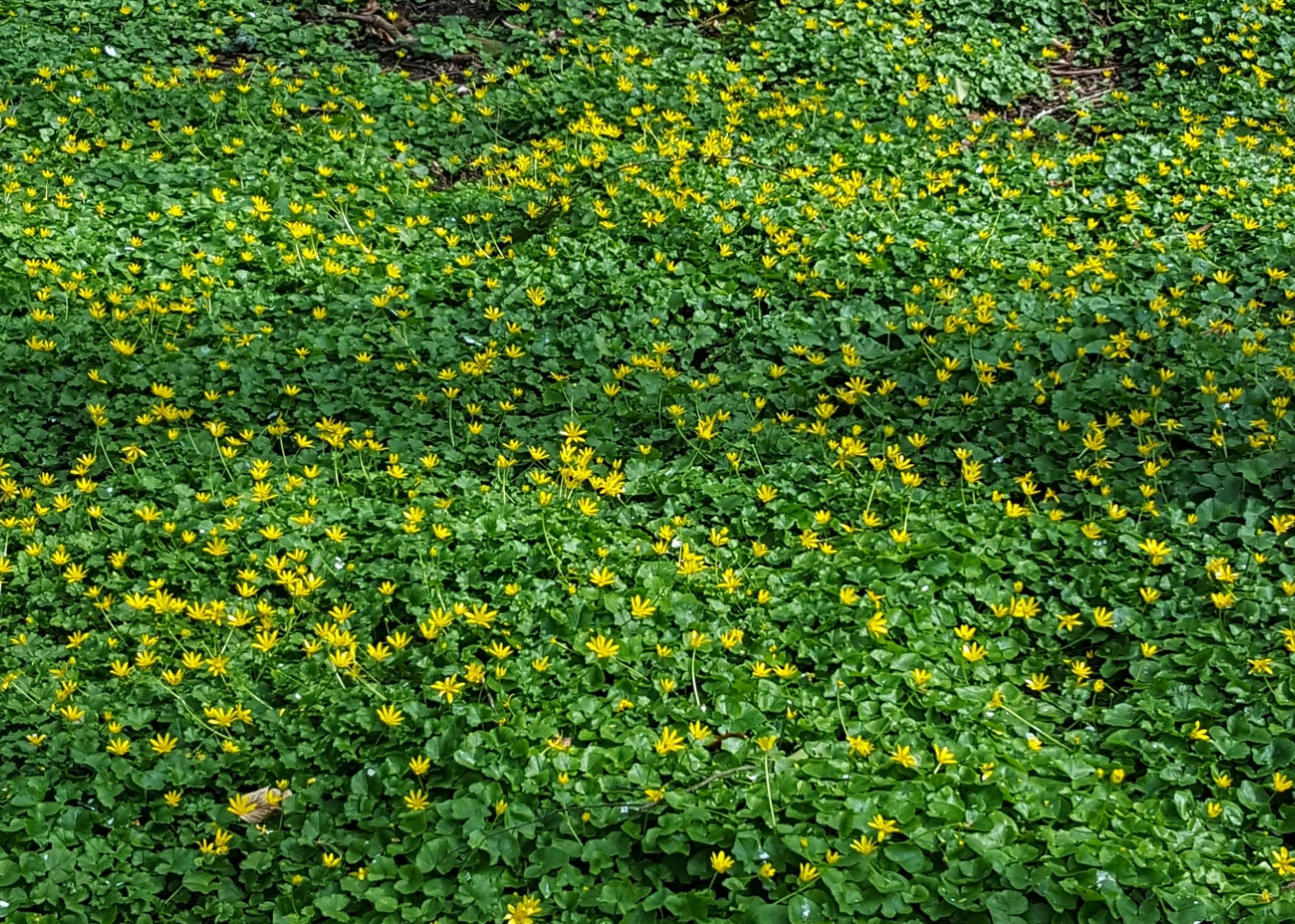
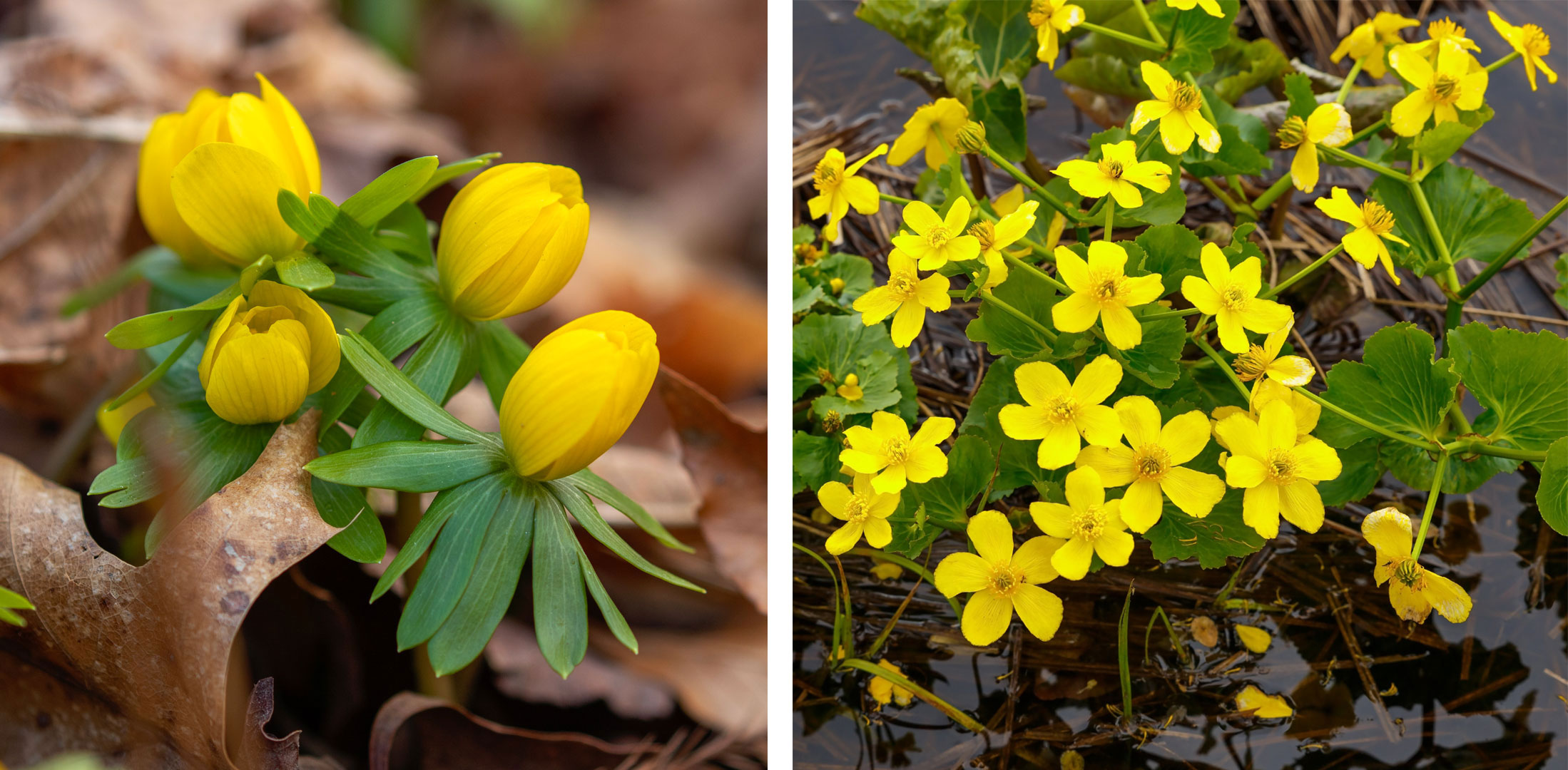
- Identified by its dark green, waxy, kidney shaped to circular leaves and bright golden flowers that have 8-12 petals.
- Introduced as an ornamental during the 1800s.
- Most prevalent in floodplains, moist lowland, and riparian areas near bodies of water, but it easily and quickly spreads into upland areas if left untreated.
- Populations spread mostly through disturbance of its near surface-dwelling root nodules or corms. Due to the nature of these corms, scraping boots after entering or hiking in an area with celandine is important, as they readily spread along trail edges, carried along in the soles of hiking boots.
Each spring, you may notice the small yellow flowers that begin carpeting our property in late February and March. Known as Lesser Celandine (Ficaria verna), this species has become a serious land management challenge at Rowe Woods and natural areas across the U.S.
Lesser Celandine was likely introduced by Carl and Mary Krippendorf, the original stewards of Rowe Woods. Passionate gardeners, they brought botanical varieties from all over the world to their homestead, creating woodland gardens with colorful plants in bloom during every season. To this day, we celebrate many of these additions throughout our Arboretum and natural areas. While many of their non-native plantings faded over the years or remain contained, a few have spread aggressively and require management. These invasive species, such as Lesser Celandine, are now exceptions to the protection we extend to the property’s horticultural history.
Fast forward to 2026 where we face the reality of balancing legacy with modern land management knowledge and practice.
At best, Lesser Celandine displaces native spring ephemerals and spreads rapidly. While these issues are generally agreed upon by the professional community, the exact effects on local ecology have not been completely documented. Although concerns have been raised for decades, limited resources and the plant’s brief seasonal window for treatment have made consistent control difficult. While it is not the first time we’ve managed the plant, this year marks a turning point. With over 300+ acres carpeted in the plant, and a treatment window of sometimes less than a month per year, the problem at Rowe Woods is daunting. Instead of scaling back, we are intensifying our response.
The strategy for 2026 and the next few years includes collaborating with other regional practitioners, reviewing emerging research, expanding topographical mapping of our property, and doubling our fieldwork efforts with the support of external contractors alongside our conservation team. While no single long-term solution exists yet, we are committed to significantly reducing Lesser Celandine populations and restoring space for native wildflowers to thrive.