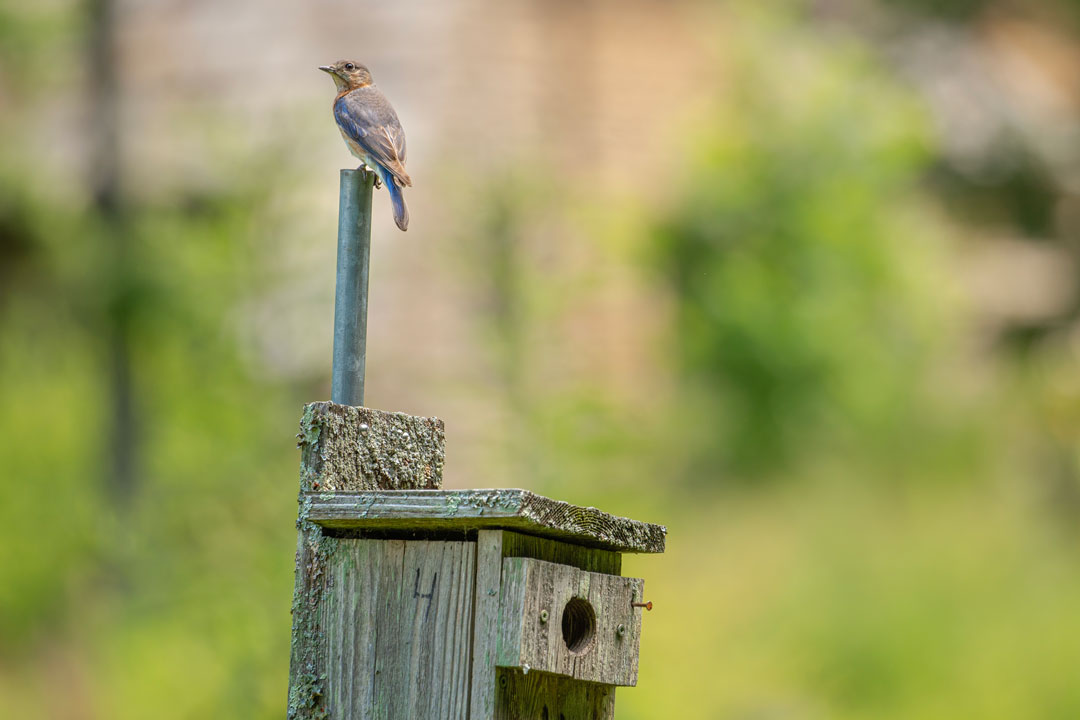


My passion for nature and birds began in the late 1960’s as a young teenager. I was hooked when my father took me on an Audubon Society Christmas Bird Count in Milford. I spent considerable time at Cincinnati Nature Center as well, learning many things about nature from the knowledgeable naturalists on staff. This lifelong interest in birds and natural history followed me into retirement. I have been fortunate for the opportunity and time to develop ways to help others learn bird identification. But I consider identification just the beginning.
Birds are incredibly beautiful, complex, and fascinating creatures. We can learn so much about how the natural world works by understanding birdlife and the critical role it plays in earth’s ecosystems. Through this, I believe we can learn more about ourselves, and how we can make a positive impact on preserving our natural world.
Curiosity about birds and Cincinnati Nature Center's online course Birding Through the Seasons, may have led you (the reader) here. As the author and instructor, I would like to share some thoughts about the course, and how it evolved from my long-term interest in birds and nature. It’s my sincere hope that the course will provide interesting information to build your bird knowledge and field skills. However, what’s more important to me is that you come away with a deeper appreciation of the incredible beauty, diversity, and contribution to nature that our feathered friends bring. This is what a lifetime passion for studying birds has done for me.
If you are new to birding, don’t be intimidated!
My suggestion is to simply start where you are regardless of your level of experience.
• Don’t worry about the large number of birds and what may feel overwhelming.
• Use all the tools available.
• Spend time looking at your feeder.
• Get outside with your binoculars.
• Find other birders to help you learn.
• But most importantly, remember that how much you know about birds is less important than experiencing their many gifts.
So, what is the course about, why are we doing it, and what could it bring to you?
Birding is an extremely popular activity with interest continuing to grow. Modern cameras and other digital tools have contributed significantly to this. The positive health benefits of birding are profound. You don’t need to read articles about this to understand why—I have read many. They describe substantial improvements in well-being, stress, mood, and attention. But remember, it’s also just fun and gets us outside!
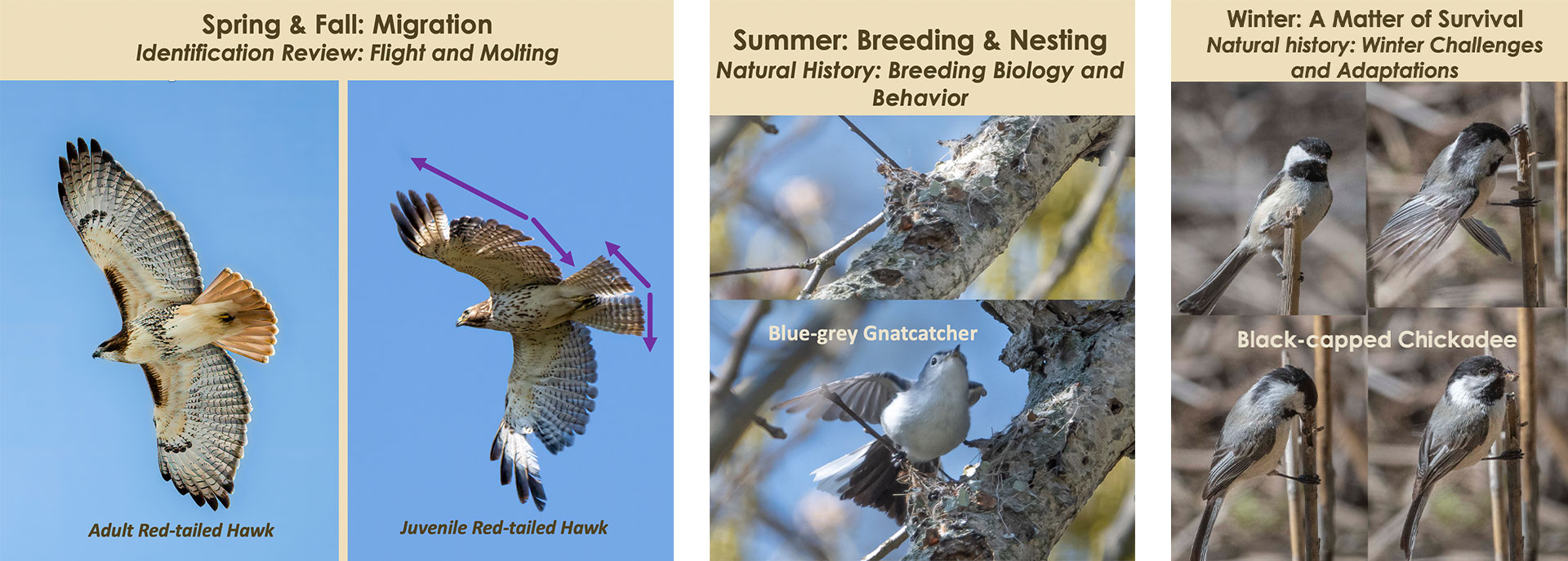
This course takes you through a year in the life of birds, hence the title Birding Through the Seasons. Birds you are likely to already know, or can easily find in Ohio, are emphasized. There are three separate “seasonal” modules or sessions: winter, spring & fall, and summer. Each session concentrates on bird biology important at that time of the year. Since birds change their feathers, behavior, location, and food sources, all this helps with identification. Spring and fall are combined since bird migration is the common activity at these times of the year.
Every session presents different (but complimentary) information covering identification, natural history, common bird groups, and conservation. Sessions may be taken individually or together. Information isn’t repeated but reinforced as the course evolves. When taken together, participants come away with a comprehensive review of included topics.